Plan a private label toner project from product specifications and sample approval to artwork, pilot orders, quality checks and repeat supply.
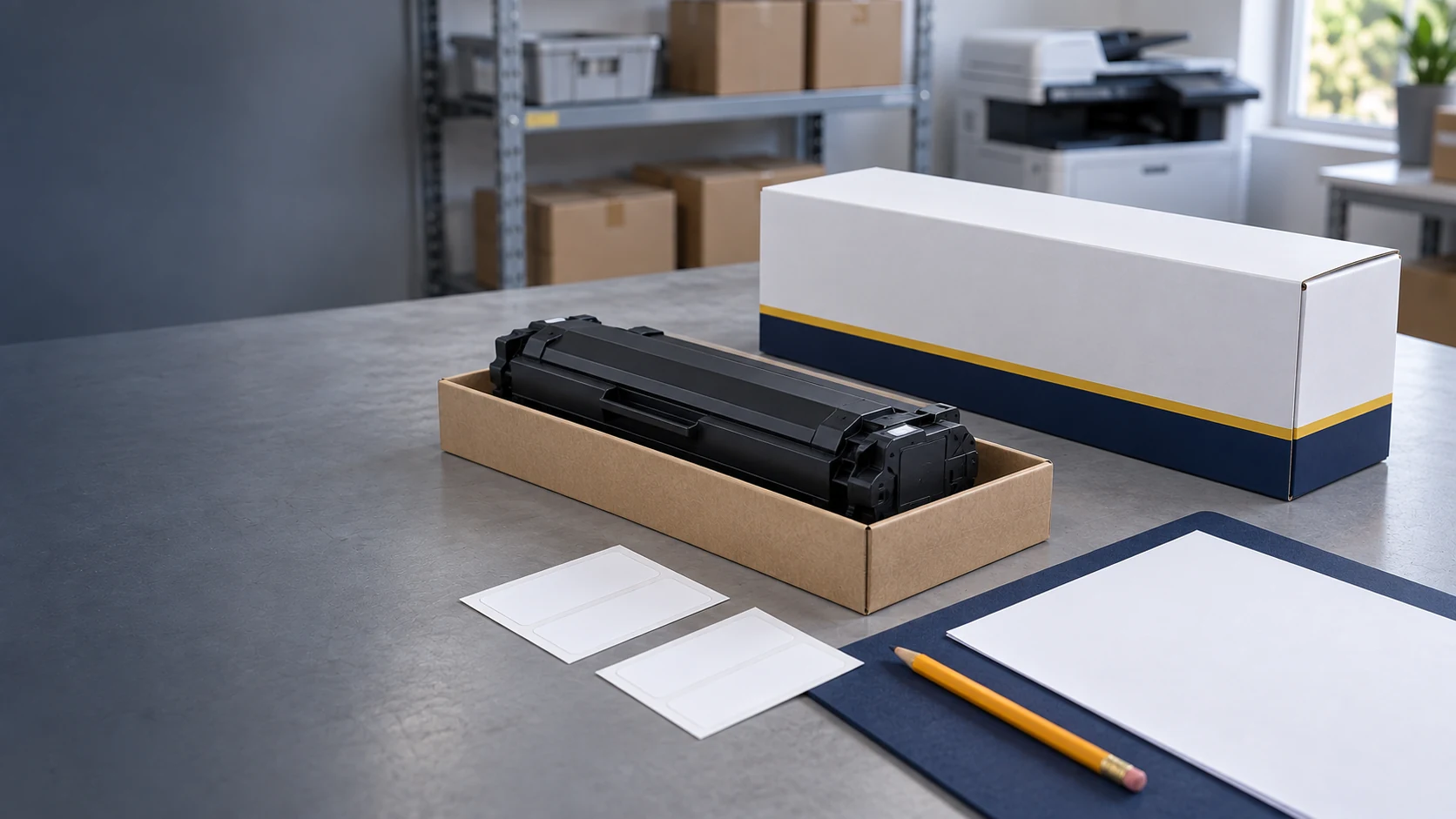
A private label toner project turns an agreed product specification into repeatable supply under your brand. For importers, distributors and service businesses, the essential sequence is to define the product, validate samples, approve artwork, run a controlled pilot and release each shipment against the same records. A logo identifies the brand; the specification and approval history define what customers should receive.
Cover image: Representative product and packaging review; the cartridge, carton and workspace are not verified HBtoner products or facilities.
Define the product behind the brand
This guide concerns buyer-branded compatible toner cartridges and bottles supplied independently of the printer manufacturer. Some suppliers call this “OEM service,” but that commercial expression does not make the product genuine printer-manufacturer toner or establish OEM authorization.
On narrow screens, swipe horizontally to compare all columns.
| Product description | What to record | What branding cannot prove |
|---|---|---|
| Genuine OEM-branded toner | Original manufacturer identity and the exact item | A supplier using “OEM service” is not evidence of OEM authorization |
| New-build compatible product | Independently manufactured construction and approved device references | Your logo does not establish compatibility or yield |
| Remanufactured compatible product | Agreed reused and replaced components and acceptance criteria | Private-label packaging does not change the product into a new-build item |
State the construction and compatibility description consistently on the quotation, sample record, packaging and sales page.
Use the OEM versus compatible toner guide to distinguish product identity from branding.
Start with one product and commercial brief
Build a line for each proposed item before requesting final prices or printing cartons. A broad machine-family name can hide differences in references, regions, capacity versions or chips.
- Identify the OEM reference, complete machine model and suffix, destination, color, capacity version and required new-build or remanufactured construction.
- Add firmware or chip information where relevant, quantities by item, replenishment plans, packaging scope and the desired launch date.
- Separate product minimums from minimums for printed cartons, labels or inserts, and identify charges for samples, design, printing setup and freight.
Agree who supplies technical information, who approves artwork and who can authorize production. For a mixed order, track readiness and commercial terms by item instead of assuming one minimum or schedule covers the whole range.
Review the supplier-selection guide when assigning sourcing, inspection and claim responsibilities.
Approve the specification and validate samples
A useful specification identifies the construction, relevant components, seals, chip revision where applicable, packaging protection and lot marking. Pair an approved physical sample with dated documents and agreed acceptance criteria; “same as sample” alone leaves too much undefined.
- Record the sample identifier and lot, device model, firmware where relevant, machine condition, paper, settings and test files before testing.
- Check fit, recognition and print results on the intended devices, including density, background, fine detail and color where applicable.
- Retain representative print samples and document later-stage behavior where practical, then record approval or the changes required before another trial.
Choose sample quantities and thresholds for the product and risk; this guide does not prescribe a universal acceptance rate. A passing sample supports the evaluated configuration, not every machine or future shipment.
Treat artwork as a technical approval
After product identity is stable, prepare separate version-controlled files for the product label, retail carton, insert and shipping marks. The brand owner should provide assets it is entitled to use and arrange destination-specific review of wording, trademarks and required information.
- Match every product reference, model suffix, color and capacity statement to the approved specification.
- Check language, handling instructions, pack count, dimensions, importer details where required, and the placement of labels on the physical package.
- Confirm the barcode system and identifier owner, then test the printed proof with the receiving workflow.
- Approve the final files in writing and name the revision that the printer and packing team must use.
A GTIN identifies a trade item within the GS1 system; it is not the same as your internal stock code or a production lot identifier. Within GS1 rules, a primary-brand change requires a new GTIN; check other product or packaging changes against the applicable allocation rules.
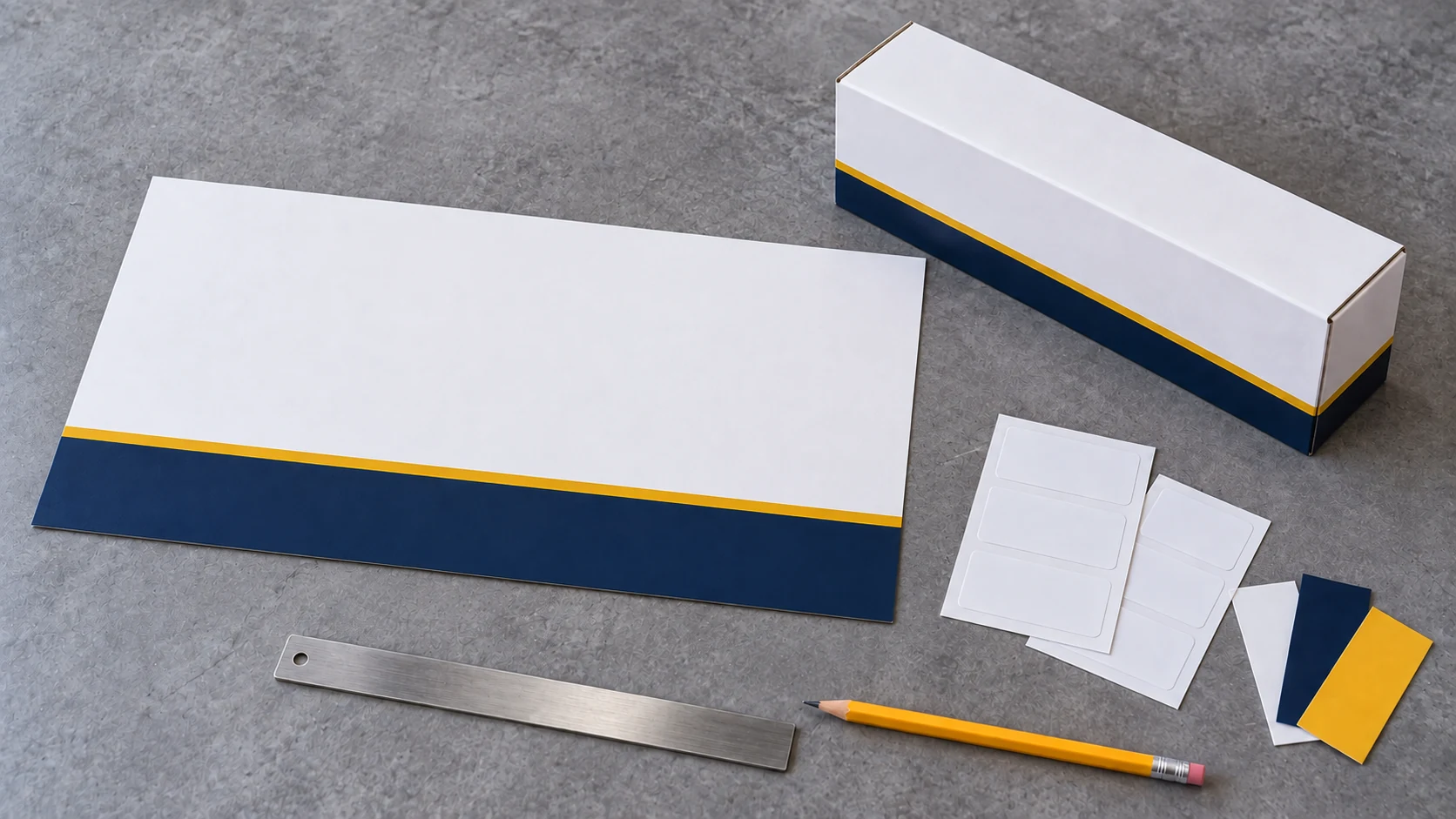
Use a pilot to test the complete delivery
Retain an approved reference set that includes the product, label, insert, protective packaging and relevant carton versions. Record the date, lot and document revisions so a later reviewer can determine what was approved. Choose a pilot quantity and evaluation period that exercise normal production, packing and customer use while remaining traceable. Check warehouse picking, barcode scanning, instructions and transit protection as well as printing; define who decides whether the project can expand.
On narrow screens, swipe horizontally to compare all columns.
| Approval point | Record to retain | Suggested approver |
|---|---|---|
| Product definition | Item matrix and dated specification | Buyer technical owner |
| Sample acceptance | Test conditions, results and exceptions | Buyer technical or quality owner |
| Artwork release | Approved files and physical proof reference | Named brand and technical approvers |
| Pilot decision | Lot feedback and documented release decision | Agreed project owner |
| Shipment release | Inspection, packaging revision and lot records | Authorized quality and shipment roles |
These are suggested responsibilities to adapt in the project agreement, not a statement of HBtoner staffing or a universal approval policy.
Release each lot against the agreed records
Before shipment, reconcile the purchase order, specification, approved changes, inspection results and packaging revision. The control plan should identify which checks apply to that item and whether they are unit checks or sampling checks. Do not interpret a general QC statement as proof that every test was performed on every unit. Record deviations, rework and any authorized concession before release, with a person empowered to hold disputed goods. Confirm destination and transport documents with the responsible logistics and compliance teams, and compare received item and carton labels with the order before distributing stock.
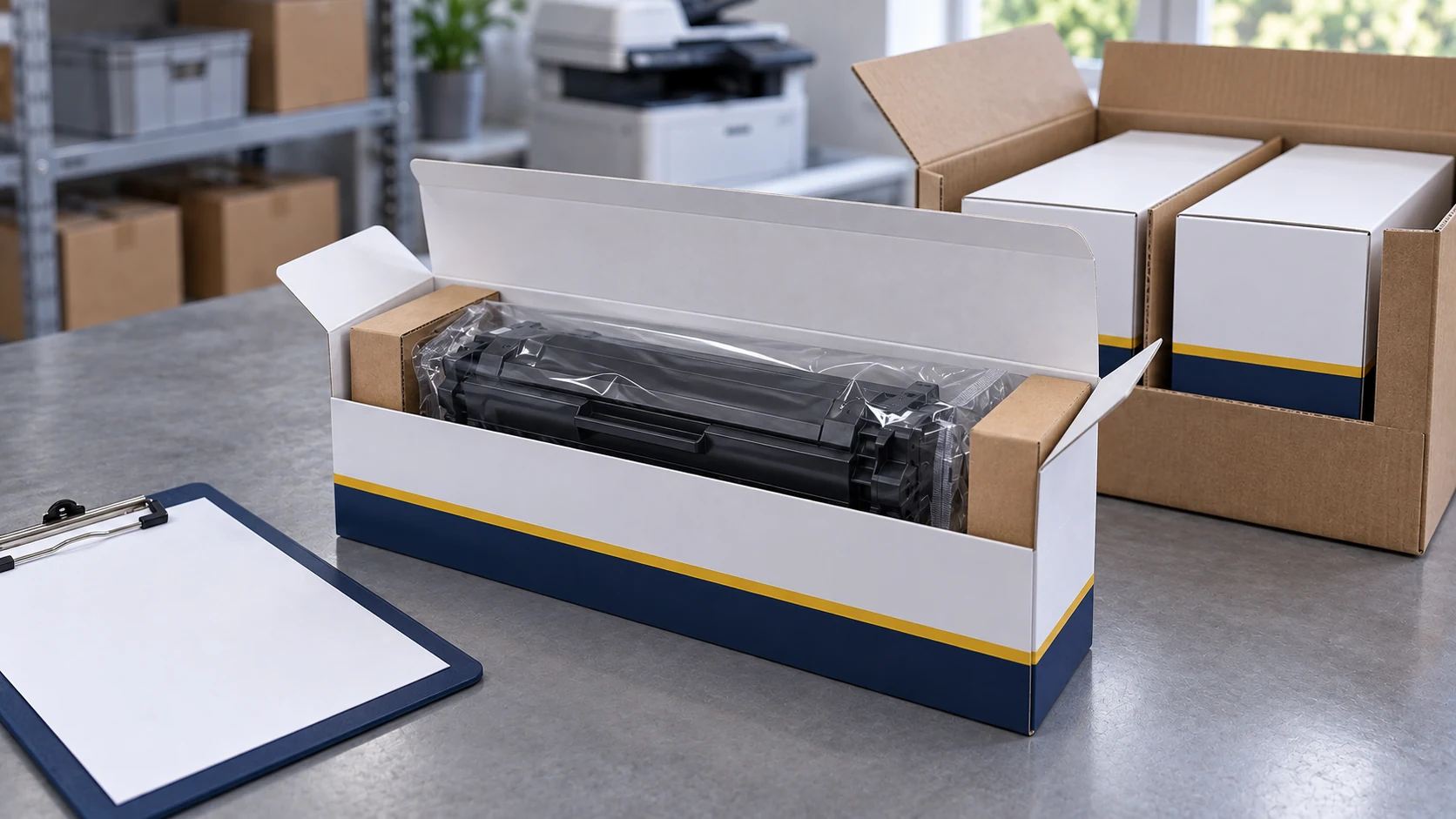
Control changes on repeat orders
A reorder should reference the approved product and packaging revisions, not just the brand name or the last invoice. Agree which changes require notification, written approval or new testing, including changes to toner, chips, seals, manufacturing source and printed claims. Give obsolete artwork and packaging a clear withdrawal process so an old version cannot silently return to a new lot. Prepare the claim process before launch, including the buyer SKU and lot, device and firmware where relevant, installation history, exact error and print evidence. Define response responsibilities and remedies in writing; a replacement promise alone does not explain the cause or prevent recurrence.
Keep product claims tied to evidence
For page-yield statements, request the named method, edition, device, conditions and report supporting the particular configuration. ISO/IEC 19752 and ISO/IEC 19798 address yield within their respective scopes; a yield result does not establish print quality, reliability or universal compatibility. Keep management-system certificates separate from product claims, and verify the holder, site, scope and current status before using any certification wording. Avoid broad environmental promises; describe a specific supported attribute, such as verified packaging content, and review the wording for the destination market.
Frequently asked questions
What is the minimum order for private label toner?
Request written minimums by product and printed component, including whether mixed items can share a packaging run; no single minimum should be assumed.
How long does the project take?
Ask for a schedule from complete inputs through sample approval, artwork, materials, pilot, production and freight, with dependencies and the lead-time starting point identified.
Can one carton design cover several products?
It may be possible if product identification remains accurate and the packaging fits; approve item-specific labels, capacity statements, barcodes and market information for each configuration.
Who owns the artwork and printing materials?
Define ownership, permitted use, editable files, printing tools, confidentiality and treatment of unused or obsolete packaging in the written agreement.
Can the box describe compatible toner as OEM toner?
Do not use wording that presents an independent compatible product as genuine or OEM-authorized; keep compatibility references clear and obtain appropriate review of the final market-facing description.
Prepare your private label toner inquiry
Send HBtoner the destination country, OEM references, full device models and suffixes, quantities and replenishment plan. Include your construction requirement, available chip or firmware information, label photos and the cartons, labels or inserts you want to customize. HBtoner coordinates the appropriate source and specification through a manufacturing network for the product and destination, and can review the proposed scope before sampling or quotation.
Send your private-label project brief to HBtoner.
OEM names and references are used only for identification and compatibility; HBtoner is independent of, and not affiliated with or endorsed by, the original equipment manufacturers.