Check the exact DR reference, full model and market, then agree sample acceptance, packaging and repeat-order records before sourcing a compatible drum.
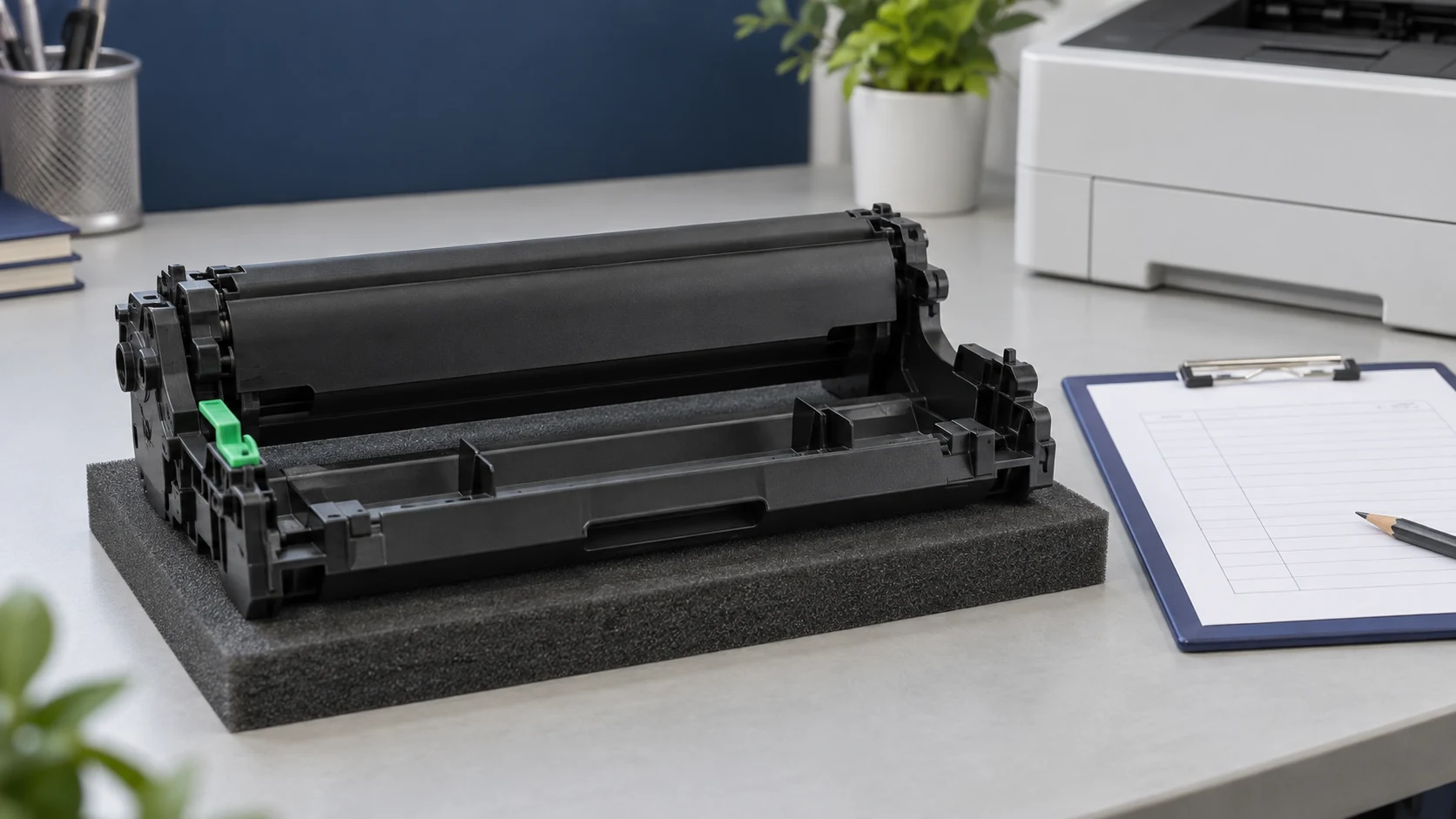
To source a compatible Brother DR-series drum unit, start with the complete printer model, the destination market and the exact drum reference listed by Brother for that market. Then turn that identity into a written order specification covering the supplied assembly, sample acceptance, packaging and repeat orders. A similar housing, a matching number fragment or an OEM page-life estimate does not establish that a compatible offer is suitable.
Cover image: Representative procurement scene with a protected drum carrier and an unfilled machine-record sheet. Confirm the full model, market and drum reference before ordering.
Separate the drum reference from the toner order
DR identifies the drum references discussed here; TN identifies the separate toner cartridges used with the relevant machines. Write drum unit and toner cartridge as separate order lines unless the supplier explicitly offers a bundle, in which case list every included item. Replacing a separate toner cartridge does not replace the drum, and a drum-only quotation should not leave toner inclusion ambiguous.
Also state whether you need a complete replacement assembly or a component for rebuilding one, and whether the offered product is new or remanufactured. The word compatible alone does not resolve those differences.
Use the imaging-unit and drum-unit guide when a supplier uses a different assembly name.
Use official US examples to check the matching method
The examples below are listed on Brother USA product pages, checked on October 4, 2026. They identify original Brother drum references and a few listed machine models; they are not an exhaustive compatibility list or approval of any third-party product.
On narrow screens, swipe horizontally to compare all columns.
| Drum reference | Source market | Listed model examples | Order check |
|---|---|---|---|
| DR630 | United States | DCP-L2520DW, HL-L2300D, MFC-L2700DW | Retain the full model and DR630 reference. |
| DR730 | United States | DCP-L2550DW, HL-L2350DW, MFC-L2710DW | Do not substitute DR630 because the housing looks similar. |
| DR720 | United States | DCP-8110DN, HL-5470DW, MFC-8710DW | Keep DR720 distinct from DR730 in the product master. |
| DR820 | United States | DCP-L5500DN, HL-L5200DW, HL-L6200DW | Check the exact workgroup model and local supply reference. |
For a machine bought in another market, open the official supplies page for that country and complete model rather than translating the US reference into a presumed equivalent. If the label, local listing and supplier cross-reference disagree, keep the order on hold until the difference is resolved in writing. Record the source URL and check date beside the approved mapping so it can be reviewed when a model or supply reference changes.
Make the quotation specific enough to reorder
A useful order line connects the customer requirement to an identified supplier configuration. For example, a request can specify a complete drum assembly referenced to DR730 for an HL-L2350DW used in the United States, with toner excluded and the companion TN reference to be confirmed from that machine’s local supplies page. The supplier should then confirm the offered item code, product condition and revision against that request; this example is not an HBtoner stock listing.
- Identity: exact DR reference, full machine model and suffix, destination market, assembly contents and pack quantity.
- Configuration: supplier item code and revision, new or remanufactured condition, and companion toner used for evaluation.
- Approval basis: sample or lot identifiers, agreed checks, acceptance criteria and who may approve a change.
- Commercial details: quantity, packaging artwork, replenishment timing and project-specific quotation, delivery and claim terms.
Ask about installation and recognition requirements for the exact offered configuration instead of requiring a chip, charge roller, cleaning blade or waste capacity simply because it is called a DR unit. Internal charging and toner-recovery arrangements vary by design; the supplier’s specification and the applicable model documentation must define what is actually supplied.
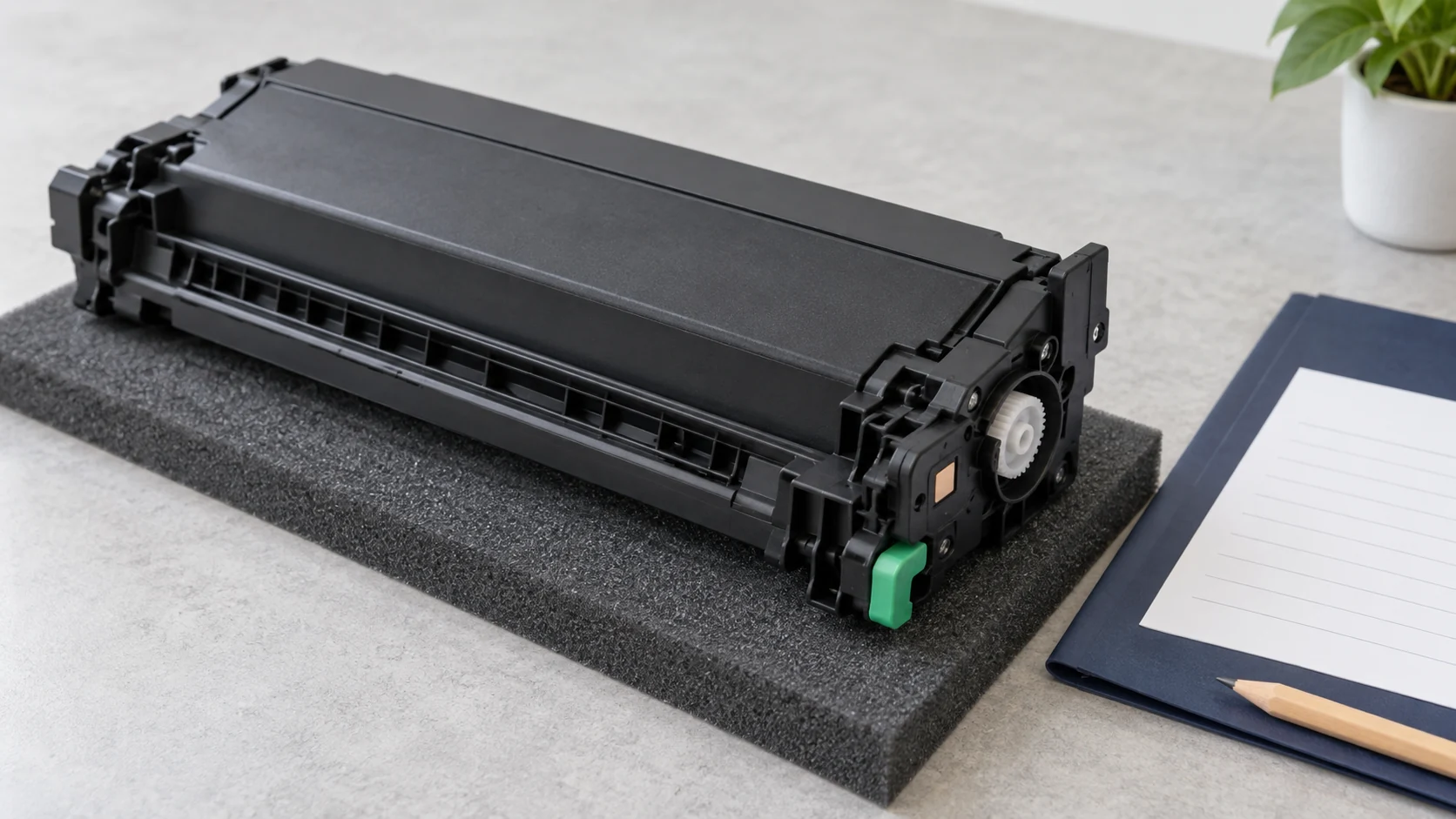
Approve the sample against a written acceptance record
Agree the evaluation before testing so a successful installation is not mistaken for evidence of long-term life or consistency across a shipment. Use the intended printer, specified companion toner and a defined job pattern, and record the actual configuration rather than relying on a supplier’s general family name.
On narrow screens, swipe horizontally to compare all columns.
| Check | Record to retain | Decision boundary |
|---|---|---|
| Identity and condition | Supplier code, revision, lot, DR mapping, model, market and supplied contents. | Resolve any mismatch before installation or relabeling. |
| Fit and installation | Condition on receipt, seating and locking observations, exact messages and model instructions followed. | Stop if force, modification or a bypass would be needed. |
| Print evaluation | Machine and toner identity, job pattern, paper, settings, counters and dated samples. | Compare with agreed criteria; preserve defects and the test conditions. |
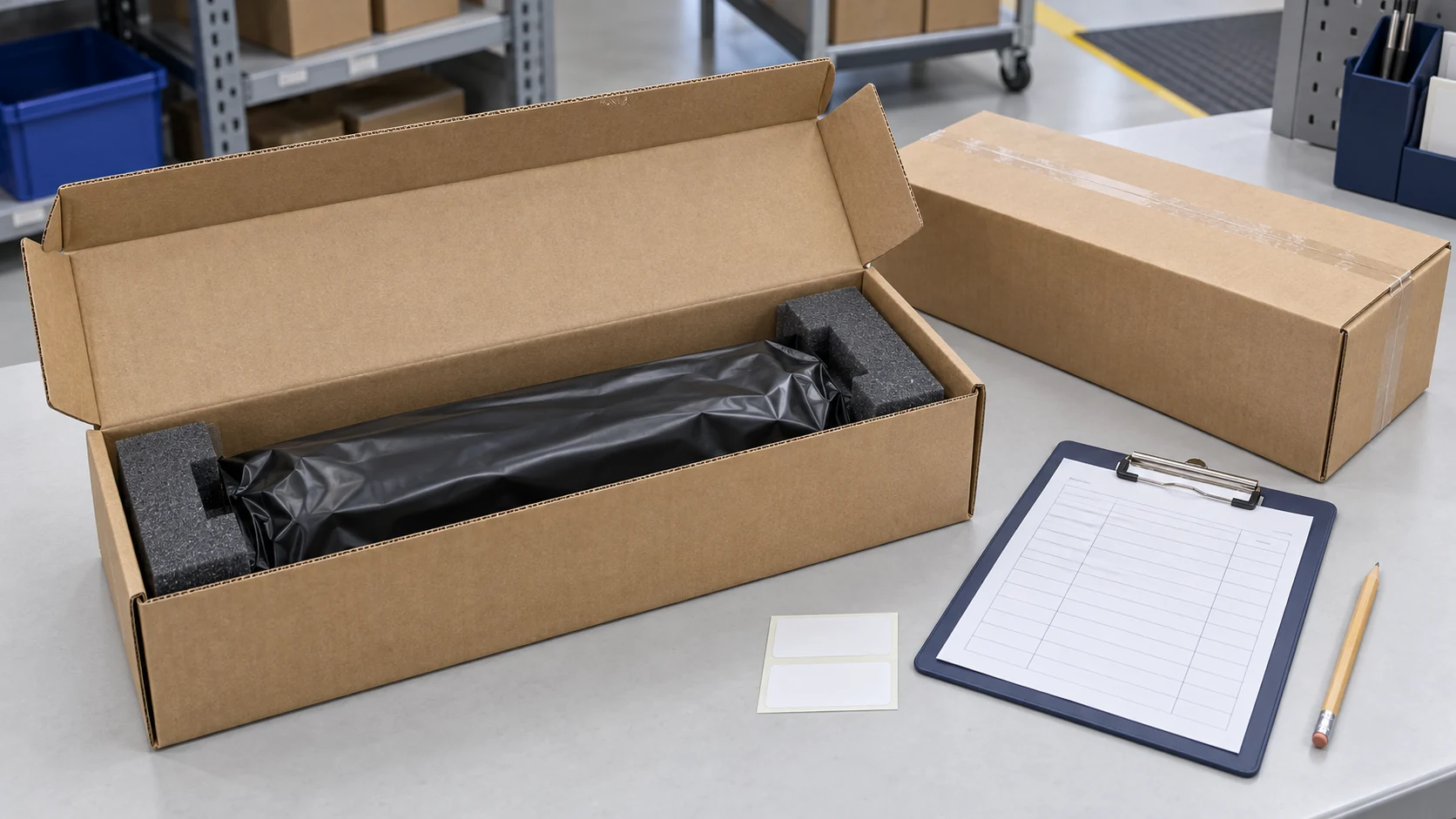
| Packaging and repeatability | Protective packing, carton marks, transport condition, approved sample and lot identifiers. | A sample approval applies to its recorded scope, not automatically to every later lot. |
Review density, background, lines, spots, ghosting and leakage under the agreed conditions, but do not assign a cause from the appearance of one page. If a problem occurs, retain the output and the exact message, isolate the affected sample, and follow the model’s approved checks with the supplier or service provider. Do not improvise cleaning, counter resets or component modifications to make a sample pass.
Use the print-quality guide to organize the evidence before attributing a defect to the drum.
Keep the unit in its protective packaging until needed and follow the product’s storage and handling instructions. Do not expose or touch the photoconductor just to inspect or photograph a procurement sample; document accessible labels and packaging instead.
Keep OEM life figures separate from the compatible offer
Brother’s published life statements describe the named original supplies under their stated conditions. They do not become a life guarantee for a compatible drum because the supplier uses the same DR cross-reference. If life is part of the buying decision, ask for the offered product’s own evidence, including the tested machine, toner, pages per job, paper, settings, sample scope and end criterion.
Read the drum-lifespan guide for OEM estimate conditions and replacement planning.
Carry the approved configuration into every repeat order
Link the purchase order to the approved supplier item and revision, the sample record and the agreed label and packing specification. Ask for notice and review of changes that affect the agreed fit, operation or packaging before shipment. On receipt, reconcile the lot codes and labels with the order and retain inspection findings, so a complaint can be traced to the relevant shipment and configuration.
For a claim, collect the order and lot references, machine model, drum and toner identities, installation history, complete message and dated output samples. Agree evidence and remedies in the purchase terms; this guide does not set a warranty, rejection rate or automatic replacement entitlement.
Frequently asked questions
Can DR630 and DR730 be treated as interchangeable?
Do not assume interchangeability: Brother USA lists different model examples for them, so check the complete model and destination-market reference before ordering.
Does a DR820 quotation include toner?
DR820 identifies a drum unit; ask the supplier to state whether the offer is drum-only or a bundle and to identify any separate toner included.
Can I use a US DR reference for a printer in another country?
Only after confirming the exact machine and local official supplies listing; a similar model name or housing is not enough to establish a regional cross-reference.
Does passing a sample test approve later production lots?
A sample result supports only its recorded configuration and test scope; repeat orders still need agreed change control, lot identification and incoming checks.
Can I advertise the OEM drum life for a compatible product?
Do not transfer an OEM estimate into a compatible-product promise; any life statement needs evidence for the offered product and a clear account of the conditions and limits.
Send a complete DR sourcing request to HBtoner
Send the exact DR reference, full machine model and suffix, destination country, quantity, required product condition and replenishment timing. Include companion toner references and packaging or private-label requirements, and share unit and carton label photos during follow-up. HBtoner coordinates the appropriate source and specification through a manufacturing network for the product and destination; compatibility, sample scope and commercial terms should be confirmed for the actual project.
Discuss the DR reference and order requirements with HBtoner.
Manufacturer names are used to identify compatibility and references; HBtoner is independent of, and not affiliated with or endorsed by, those manufacturers.