Compare imaging unit and drum unit names using official examples, then confirm the OEM reference, supplied parts and life basis before ordering a replacement.
An imaging unit and a drum unit can overlap in both name and construction; there is no universal rule that an imaging unit is the larger or more complete product. For a replacement order, use the manufacturer's reference for the exact machine, then confirm which parts and accessories the quoted assembly includes. This guide helps distributors and service providers turn an ambiguous product name into a specification that both buyer and supplier can check.
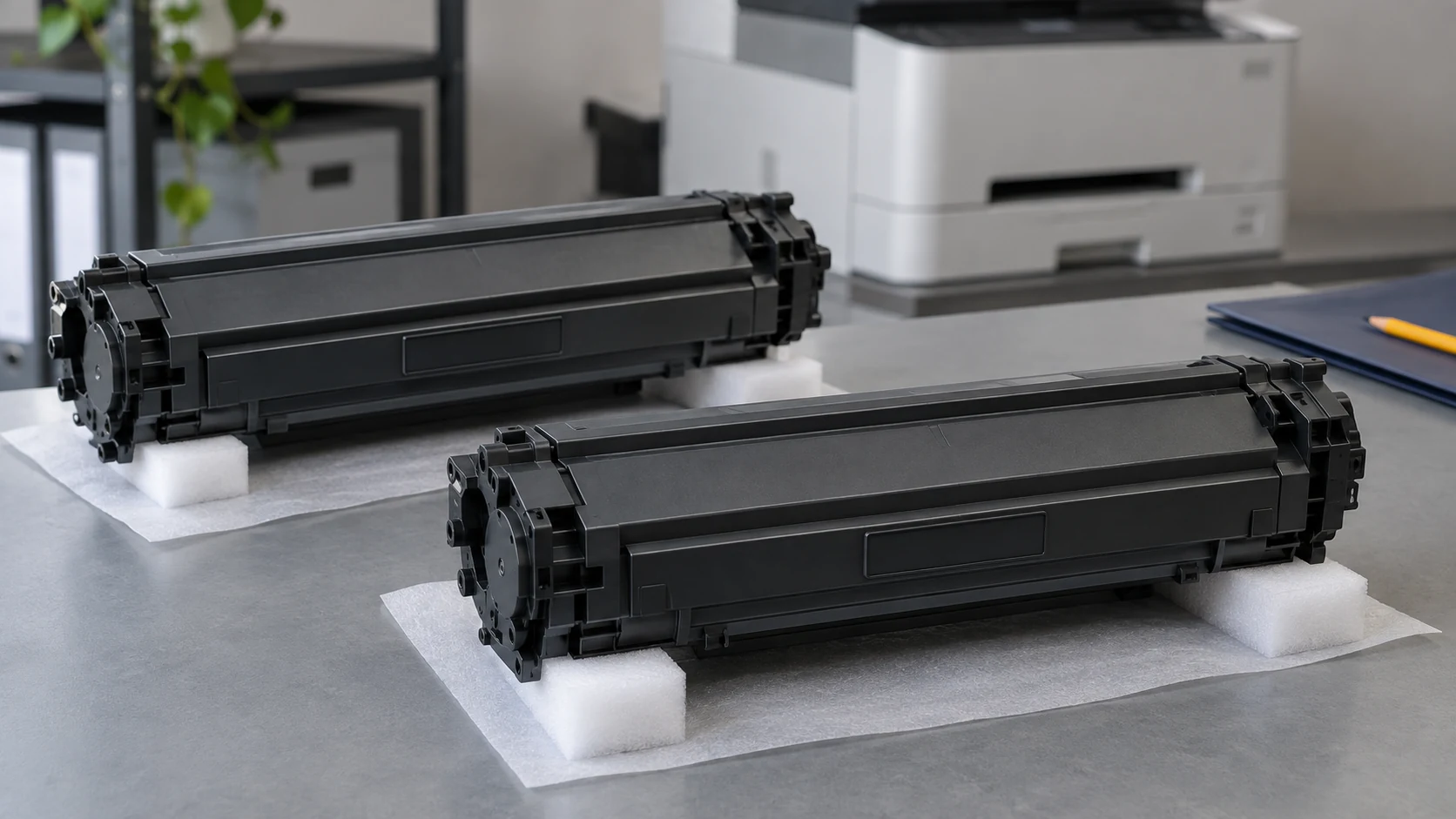
Cover image: Representative protected assemblies for a purchasing review. Their position, size and shape do not define drum or imaging-unit contents or establish compatibility.
Start with the component and the replaceable assembly
The photosensitive drum is the image-carrying component used in an electrophotographic print engine. A drum unit is an assembly built around that component, while imaging unit, imaging drum, drum cartridge and photoconductor unit are names that must be interpreted within the manufacturer's documentation. The label alone does not establish whether charging, cleaning, developer or identification components are included, or whether a component can be ordered separately.
Toner supply and drum replacement are separate decisions on machines with separate consumables; other cartridge designs combine functions. Fusing bonds toner to the sheet at a different stage of printing, so a description of the whole print process is not a list of what comes inside an imaging unit.
For the drum’s basic role and its relationship to toner, see the drum-unit guide.
Read the name in its model context
Official examples show why a supplier's generic category cannot settle the order. These examples explain terminology and service structure; they do not establish a compatibility list or an HBtoner stock offering.
On narrow screens, swipe horizontally to compare all columns.
| Official example | What the documentation shows | What to confirm for the order |
|---|---|---|
| Brother DCP-L2620DW family | The drum-replacement procedure separates the toner cartridge from the drum unit. | Whether the quote is for the drum unit, toner cartridge or both. |
| HP Color Laser 150 series | One replacement document uses imaging drum for the part and imaging unit in the related message. | Record the exact reference instead of treating the two names as two different products. |
| Lexmark CX820 | The guide describes an imaging unit and separate developer-unit and photoconductor-unit replacement procedures; the fuser has its own procedure. | Whether the offered item is the specified assembly or an internal service component. |
Abbreviations also need a source: use the expansion in the exact parts catalog or manual rather than guessing what PCU or process unit means. A translated marketplace title, a larger housing or a photograph of a drum cannot establish the supplied assembly's contents.
Build a reference record before requesting a quote
Collect the machine label, existing supply label and the official supplies or parts reference together. If a reference has been replaced by a newer number, ask for the documented supersession and its conditions rather than assuming the new number covers every machine variant.
On narrow screens, swipe horizontally to compare all columns.
| Field | Record | Ordering check |
|---|---|---|
| Machine | Full model, suffix and installation market. | Match the applicable manufacturer listing. |
| Reference | Existing part number and any documented replacement number. | Resolve conflicting labels before approval. |
| Color position | Black, a named color or a combined assembly, as specified. | Do not infer position from shell color or size. |
| Supplied contents | Assembly, internal components, accessories and exclusions. | Separate a complete unit from a service component. |
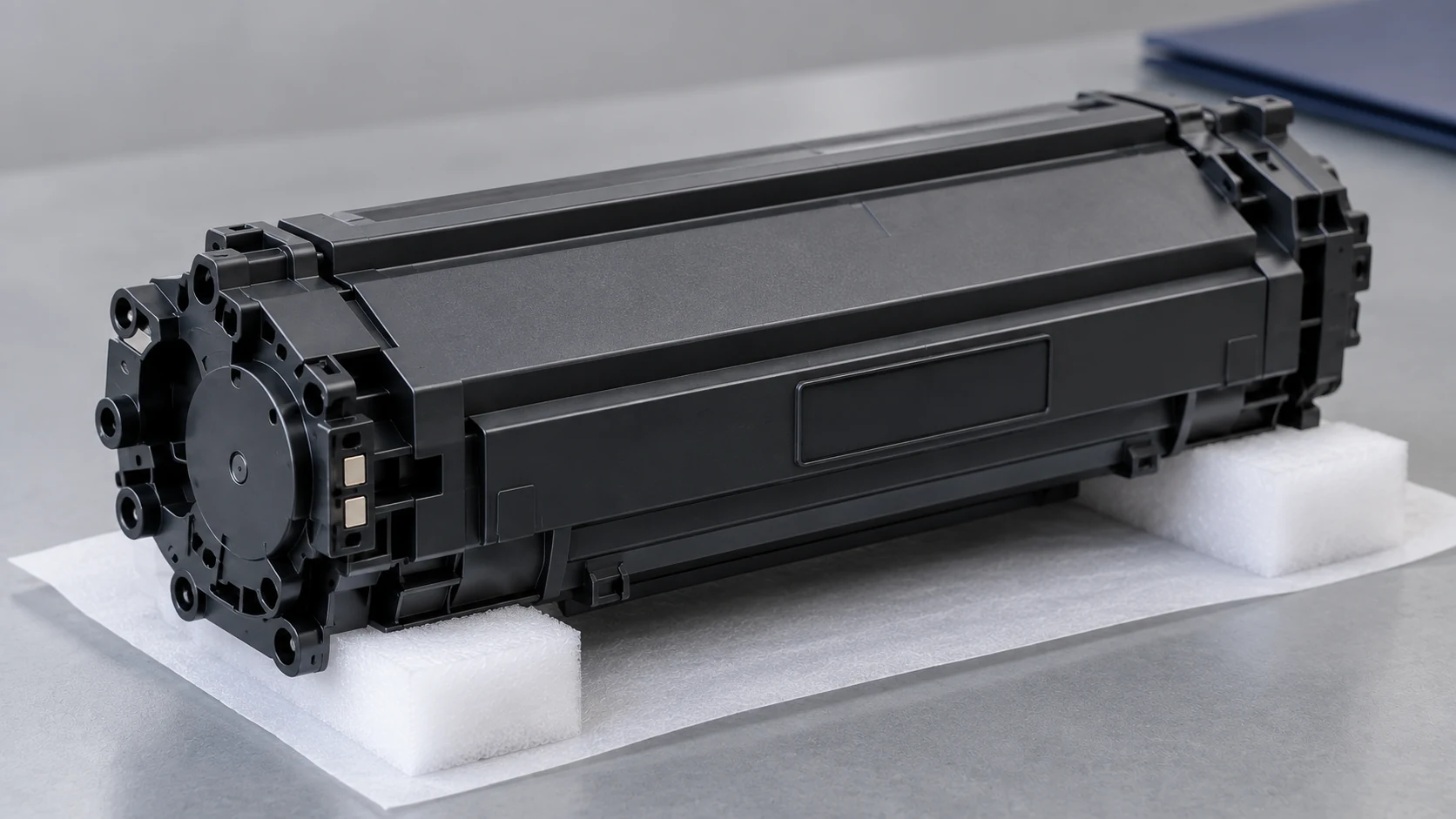
| Interfaces | Documented revision and safely visible guides, keys and contacts. | Use photos as supporting evidence, not proof of fit. |
| Recognition | Message text and any specified identification or installation requirement. | Confirm the exact-model procedure without assuming a chip is present. |
| Product condition | Genuine OEM, new compatible, remanufactured or other stated condition. | Make the quotation and packaging description consistent. |
| Performance basis | Any stated life, test conditions, acceptance method and warranty scope. | Compare equivalent units and conditions, not headline page counts. |
Photograph accessible external labels and packaging before removing anything. Follow the machine's instructions for access and keep the photosensitive surface protected from light and contact; do not open shutters or dismantle a unit merely to complete a photo request.
Confirm what the replacement actually includes
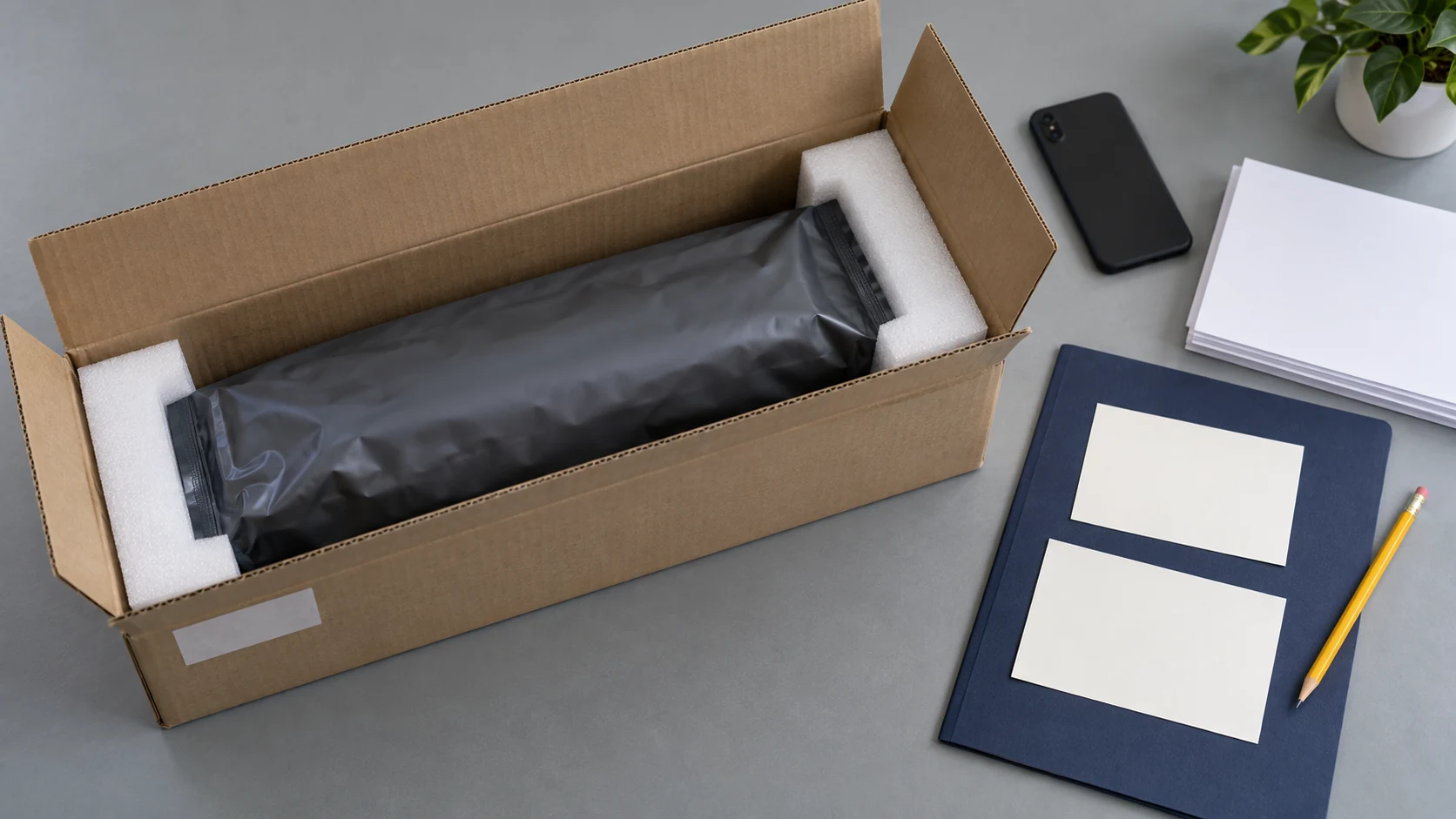
Ask the supplier to state the supplied assembly and exclusions in writing, especially when two offers use different category names. A quotation for an internal photoconductor or developer component is not automatically equivalent to a complete assembly, even if both listings mention the same machine. Confirm whether seals, protective covers, identification items and installation instructions are included or required separately for that product.
Replacing an internal drum is a different job from exchanging an operator-replaceable unit. Use only the service operation permitted for the exact model and the responsible person's training; a parts diagram is not permission to rebuild an assembly.
Use the OEM-versus-compatible guide to distinguish product origin from the assembly name.
Compare service life on the stated basis
A toner-yield figure and an imaging-unit life figure do not necessarily measure the same thing. For example, Lexmark's MS821dn specifications give a toner-yield method and separate conditions for the imaging-unit life statement, including pages per job. Brother's cited drum instructions also explain that drum life depends on rotations and operating conditions, so a page count should retain its stated assumptions.
For sample approval, agree the exact machine configuration, supplied contents, test jobs, image-quality criteria and method for evaluating any life claim. Retain the sample and lot references, results and approval record so a repeat order can be checked against the same specification.
Treat a message or defect as evidence for the next check
Record the complete displayed message and consult the exact model's replacement or troubleshooting instructions. A new toner cartridge does not also renew a separate drum unit, and a defect photograph alone cannot determine which assembly should be ordered. Perform any replacement acknowledgment or counter action only when the manufacturer's instructions require it for the part actually installed; do not use a reset to conceal wear or clear an unresolved mismatch.
Frequently asked questions
Is an imaging unit the same as a drum unit?
The names can refer to overlapping products, but they do not guarantee identical contents; use the exact model documentation, part reference and supplied-parts list.
Does a drum unit include toner?
Do not assume it does; separate toner and drum systems exist, while integrated cartridge designs combine functions, so the quoted product contents must be explicit.
Can I order by the machine message alone?
The message helps locate the relevant instructions, but an order still needs the complete model, part reference, configuration and required assembly contents.
Can the drum inside an imaging unit be replaced separately?
Only where the exact design and authorized service instructions permit that operation; confirm the correct service component and required skills before treating it as an alternative to a complete unit.
What photos should I send for a configuration review?
Start with the machine label, existing unit label, packaging reference and displayed message; add safely accessible external views only as permitted, without exposing or touching the photosensitive surface.
Discuss the required assembly with HBtoner
For a B2B compatibility review or quotation, send the OEM reference, full machine model and suffix, destination market, quantity and required product condition. State whether you need a complete unit or a documented service component, and share label and packaging photos during follow-up. HBtoner coordinates the appropriate source and specification through a manufacturing network for the product and destination; configuration and supplied contents should be confirmed before ordering.
Send your machine and assembly details to HBtoner.
Manufacturer names are used for identification and reference; HBtoner is independent of, and not affiliated with or endorsed by, those manufacturers.